
Bregenz | When Space Tells Us to Leave
“Public spaces are no longer places where people come together; instead, they’re increasingly becoming arenas of exclusion.”
― Cyprien Gaillard
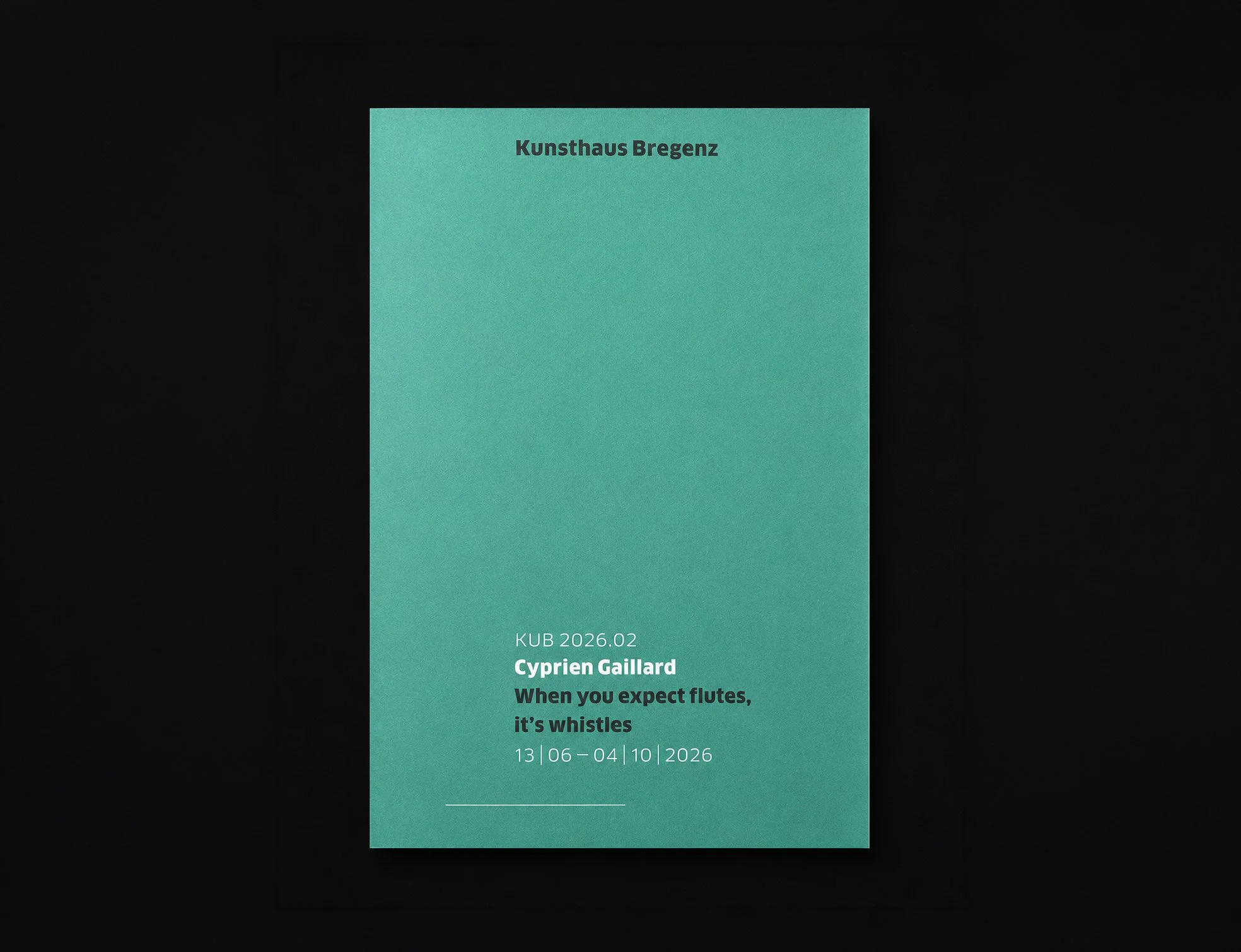
The studio was recently at the Kunsthaus Bregenz, Austria, and visited Cyprien Gaillard’s When you expect flutes, it’s whistles exhibition. We travel to look at buildings. Sometimes the more useful thing is in the gallery next door.
The honest take: I was reluctant to engage with the film at first. I was in the mood for paintings. I felt that I already knew what the movie might be about: another critical look at the urban realm with a salting of satire and existentialism thrown in. In a way, it was, but it was also about so much more. I decided to lock in.
Watching Gaillard’s film DETERRENT (2026), I was reminded of the power and unease of the epic classic Koyaanisqatsi (1982). But here watching this movie in this concrete brutalist gallery, it was less the subject matter than the use of cinema itself: image and sound making everyday urban life suddenly seem strange and rediscovered.
In the film, classical music is played outside a convenience store to discourage people from gathering. Graffiti is repeatedly painted out, only for the erasure to become a visual language of its own, like a collage of block whites and greys painted on a wall. I found myself thinking not only about the way public space is used to control behaviour, but about the absurdity of the human condition, laid bare in the systems we create to organise, protect, exclude and control one another.
As architects, we help shape the places where people meet, wait, pass through and spend their lives. We can accept the conditions we inherit, or question them. A boundary, a level change, a threshold, the absence of a place to sit: each one decides who is comfortable and who keeps walking. Most of those decisions get made quickly, on the grounds that they were made the same way last time. I think that is the moment worth slowing down. This exhibition made me look again. It makes you realise what we do to ourselves, what we impose on ourselves, without conscious agreement.
Cinema can control time in a way reality cannot. Drawing out moments that feel familiar in urban space lets us revisit them, and see new definitions of space, how we interact with them, and the limits we impose on each other. The film did that very well and it was, if nothing else, disarming.
It also made me realise how easily our preferences become filters. Gaillard’s filters, and the spaces he captures, are shaped to move people on. Ours are shaped to shelter and inspire. The mechanism is the same, and it is worth knowing which one you are drawing.
Go and see the exhibition if you can. It is a powerful way of finding out what you have stopped noticing and what spatial repression looks like.
Exhibition Details:
When you expect flutes, it’s whistles, Kunsthaus Bregenz, 13 June to 4 October 2026
—