
Paragraph 84 Houses: Making a Home in the Countryside
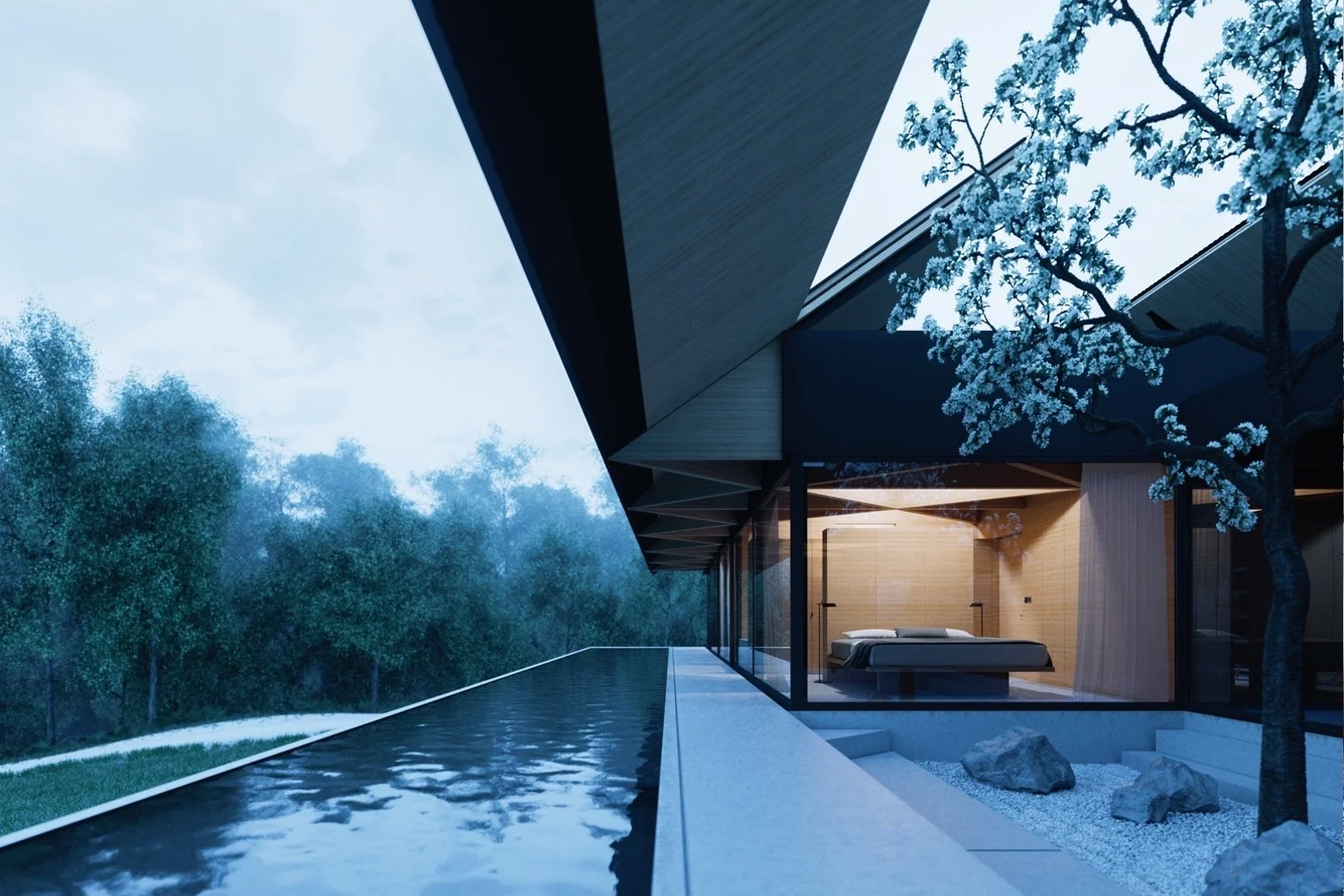
Picture this… After years of dreaming. You’ve finally found a piece of land, or perhaps for now you can just imagine it. Somewhere in open countryside. You find yourself wondering: could we actually build here? In most cases, the answer isn’t simple.
The English countryside is protected for good reason, and the planning system generally resists new homes in open country. But within the National Planning Policy Framework, Paragraph 84 opens a door, albeit a narrow one, and of course deliberately so. It permits a new home in an otherwise restricted countryside where the architecture is truly outstanding, and where the building sincerely enhances the landscape it inhabits.
So at this point you might be thinking, what does that actually mean in practice? That’s what we’d like to explore here in this journal post and of course in a little more depth. Lets dive in.
Why Constraint Can Be the Best Brief
It might seem counterintuitive, but the most demanding sites often produce the most extraordinary homes. That’s our experience over 20 years. The legendary modernist architect Frank Lloyd Wright once described constraints as an architect’s best friend. When the conditions are difficult, decisions naturally just sharpen. There’s no room for the generic, design is pushed harder. Every material, every form, earns its place within the composition because of these constraints.
Nowhere to Hide
Paragraph 84 imposes this discipline, because the bar for approval is so high, the architecture must be rooted in its place, clear in its intentions, and genuinely responsive to the landscape it will inhabit. For architects who care deeply about the relationship between buildings and land, that’s not a burden. It’s a wonderful invitation, because there is nowhere to hide.
What the Policy Actually Asks
Paragraph 84 allows a new isolated home in the countryside only in exceptional circumstances. The route most often pursued requires demonstrating that the proposed dwelling reflects the highest standards of architecture, responds sensitively to its setting, enhances the character of the immediate environment, and is underpinned by a clear and compelling design concept. In plain terms: the house must belong to the land. Not just sit on it, but emerge from its own defined territory. As though the landscape itself had shaped the building over time. This is a higher standard than just good taste. It asks for a proposal that can justify its presence with clarity and the upmost of conviction in a research and evidence based way.
Where We Begin
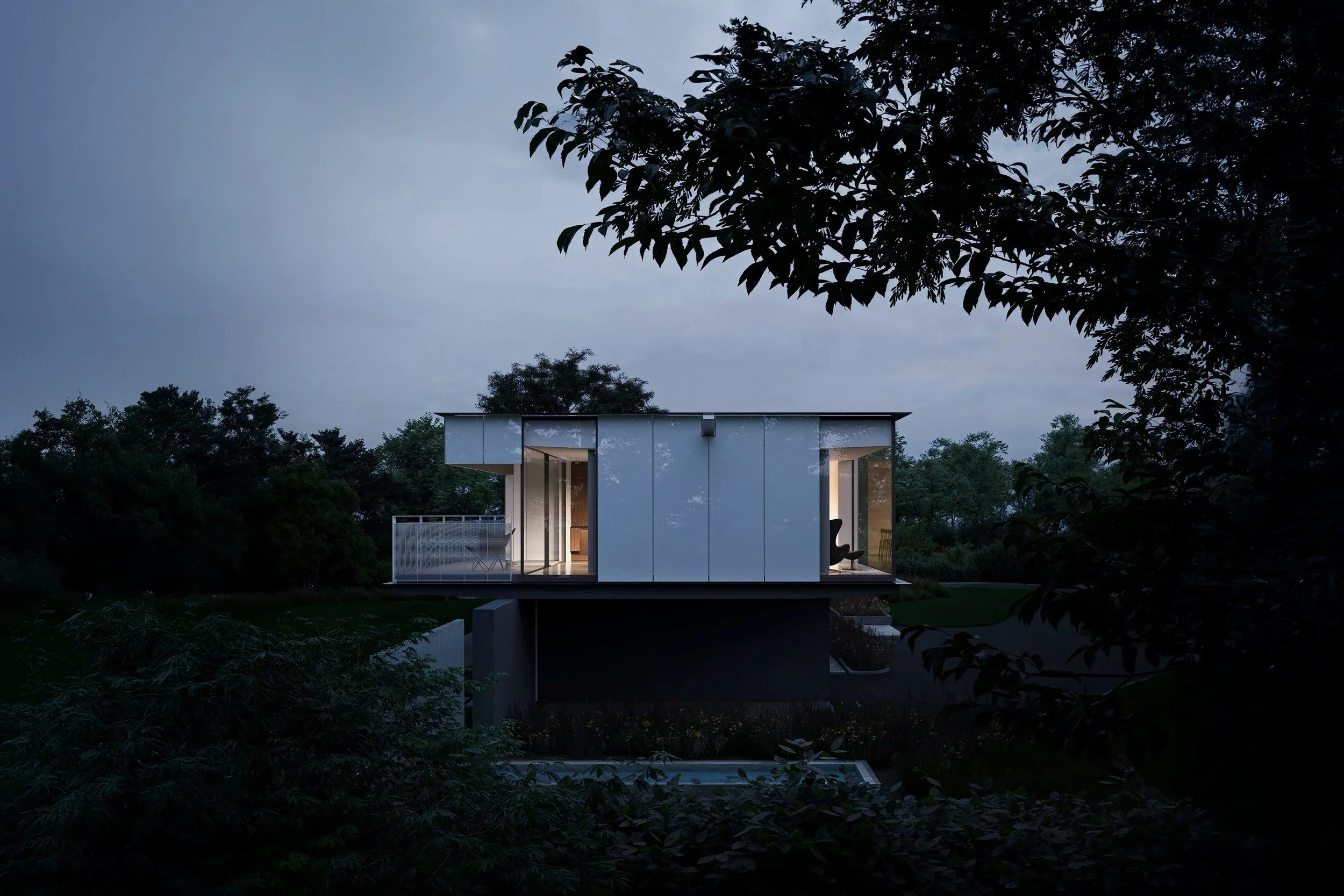
We spend time in our studio simply looking with intent to understand before we sketch. We research deeply and think about the nearest settlements, the local building traditions, vernacular typologies, the materials that have shaped a particular region. This bit of early work matters enormously. Paragraph 84 cant be satisfied by a beautiful house dropped into a sensitive setting. The connection between building and landscape has to be authentic and it has to be demonstrable. Contextual awareness really is key.
Patience Rewards
Sure the policy is demanding, and many proposals fall short, not always for planning reasons, but for architectural ones. Designs that feel generic, disconnected from their setting, or unable to articulate why this building belongs in this particular place will struggle to convince a planning authority. Paragraph 84 doesn’t reward novelty, ambition, or architectural spectacle in isolation or on its own. It rewards specificity architecture that is a poetic interpretation of its place. It also requires lots of patience. The process of developing a proposal, engaging with the landscape, consulting specialists, and working through planning takes time. Often well over a year. This isn’t a route for those looking for the path of least resistance. But for those who approach it with genuine commitment, and here the results can be extraordinary.
Architecture That Feels Inevitable
The countryside houses we most admire share a particular quality: they feel as though they couldn’t exist anywhere else. The materials, the form, the way the building sits within context, all of it seems to have been determined by the place itself rather than imposed upon it. That feeling of inevitability is what we work towards.
A Project in Practice
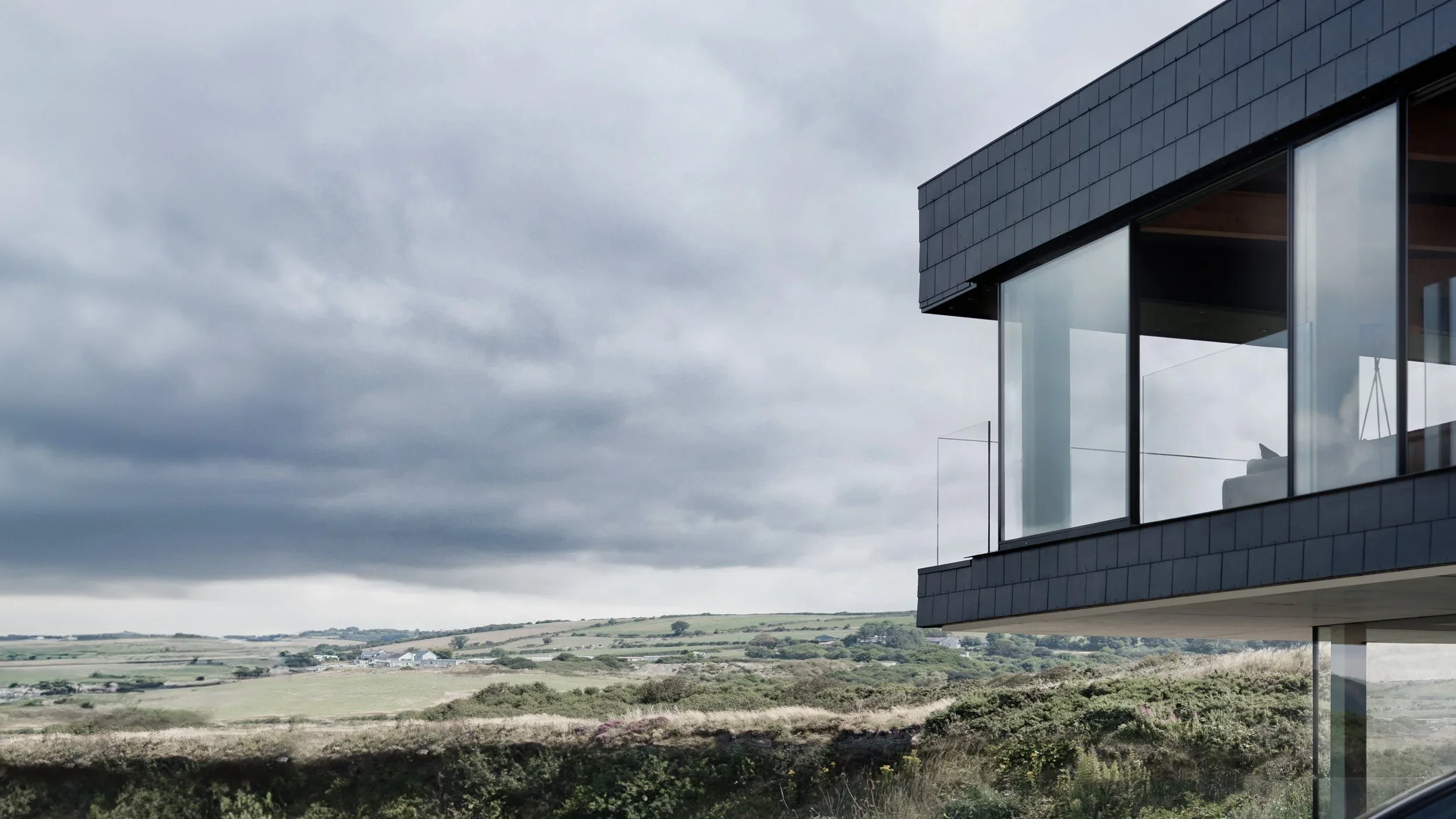
Edge House (above) One of our recent projects illustrates how the most difficult sites can become the most generative ones. Edge House embodies these principles. We were asked to design a home on a dramatic stretch of the Ceredigion coast, perched at the edge of the Irish Sea, on ground that falls steeply towards the water and faces directly into Atlantic weather. Stating that the site presented real challenges is an understatement. The climate is exposed and demanding. The coastline itself shifts slowly over time. Rather than working against these conditions, the architecture grew directly from them. The house is anchored deep into the rock. A robust, grounded base that responds to the instability of the land beneath. Above that foundation, a lighter timber structure opens towards the horizon. Deep overhangs shelter the interior from wind-driven rain while framing long views across the water. The difficulty of the site became the source of the design, it’s not a challenge it’s the release of dormant potential. The finished house feels entirely specific to this place, locked to context because it is.
What This Means
For those who have found a piece of land in the countryside, or are looking for one, Paragraph 84 may feel daunting at first. The policy is demanding, the process is long, and the standard is genuinely high. But the houses that emerge from this process are rarely ordinary. Because the architecture must respond so carefully to its setting, the resulting homes tend to have a clarity and a character that conventional development rarely achieves.
Many of our clients find that the process becomes about something more than gaining permission. It becomes about understanding what kind of home might truly belong to a particular landscape and then having the patience and commitment to bring it into existence.
The First Conversation
Paragraph 84 is often described in terms of what it restricts. But the question we think it asks is a more generous one: what kind of architecture deserves to exist in the countryside? When clients and architects pursue that question together with genuine curiosity and care, the results can be deeply rewarding and we hope last forever.
If you’re currently exploring the possibility of a countryside home, the process usually starts simply: with a conversation with you about the land, the place, and the kind of home that you might want to belong there.
We’d be glad to begin that conversation with you.
—