
Edge House Secrets
Secrets Shared
I do not often write about the personal, because in architecture the personal is rarely ours to share. People ask how we build emotion, and the truthful answer is that we can only speak around it, because the details belong to the client. Edge House is an exception, not because the story is louder in any way, but because Jane our client has allowed us to name a few themes without turning her life into a narrative.
There is loss here, and there is memory, and there is also something brighter, which is the uncomplicated joy of childhood holidays by the sea. It is difficult to write about work like this because the most truthful explanation of emotion is often the most confidential. Architecture is public, although it begins in private life, therefore we are careful. If there is a luxury worth naming, for me it’s not objects. It is the feeling of being understood without being exposed.
Where Memory Points
One moment stays with me, because it shows specifically how a conversation becomes architecture.
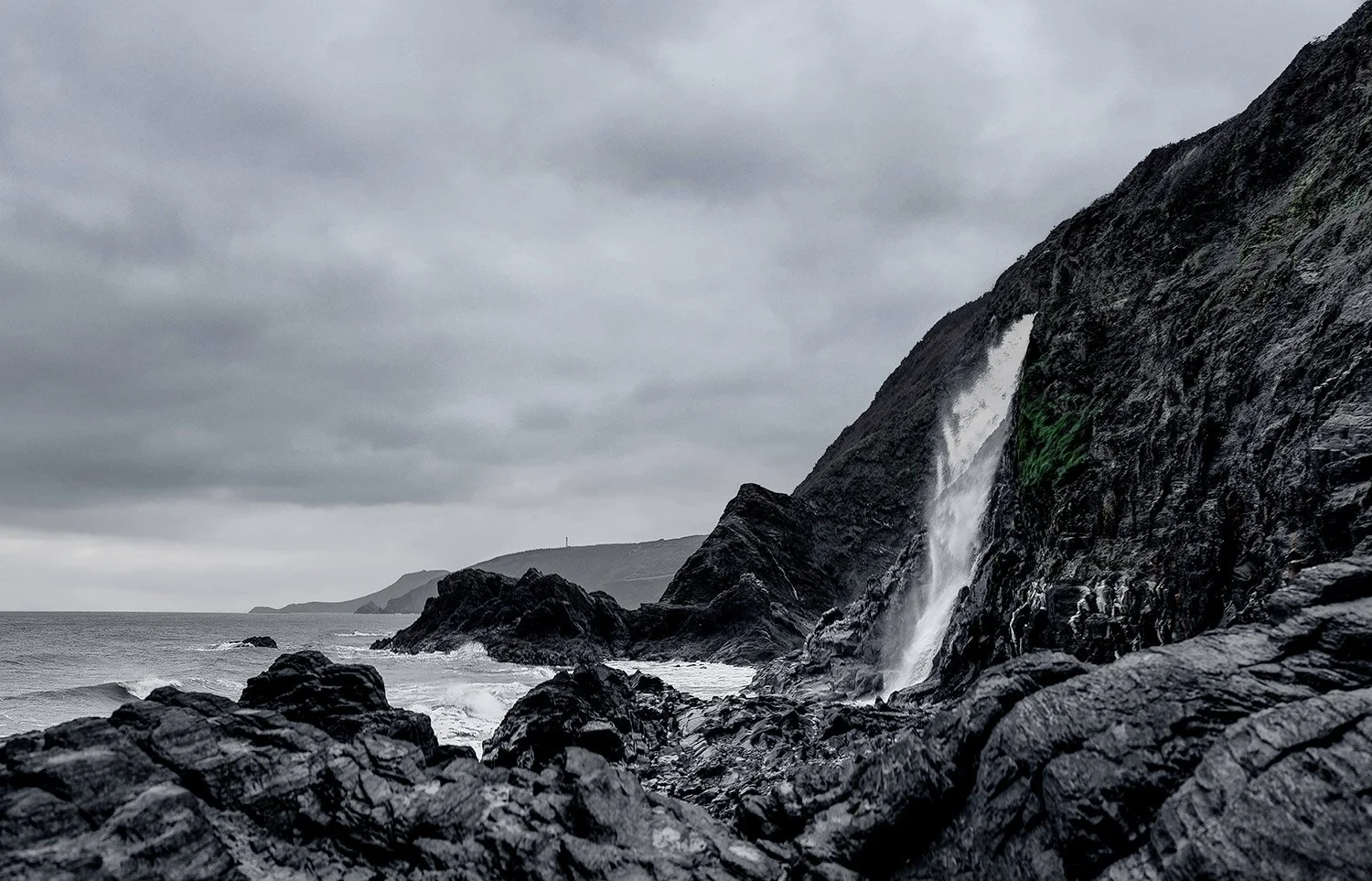
We were out on the headland, standing on the site with the full sweep of sea around us. There were 180 degrees of ocean in front of us and 180 degrees of Wales behind us. We asked Jane to point to where her memories lived in that landscape. She didn’t gesture to the grand view before us of the Irish Sea at first. She pointed down to a sandy beach beneath what would become a key reference point. In this bay, she recalled building sandcastles as a child. Then she turned to the north east and spoke about a waterfall where she used to play.
That one exchange changed the project. The ocean was always going to be the primary view, the reward at the end of the entry promenade, but suddenly the quieter views mattered just as much. The smaller and more intimate spaces began to take their cues from those coordinates of memory, and the architecture became more personal without becoming more obvious.
Most people will never know why a particular window sits where it does, and that is exactly right. Meaning is hidden in plain sight, held for the person it belongs to.
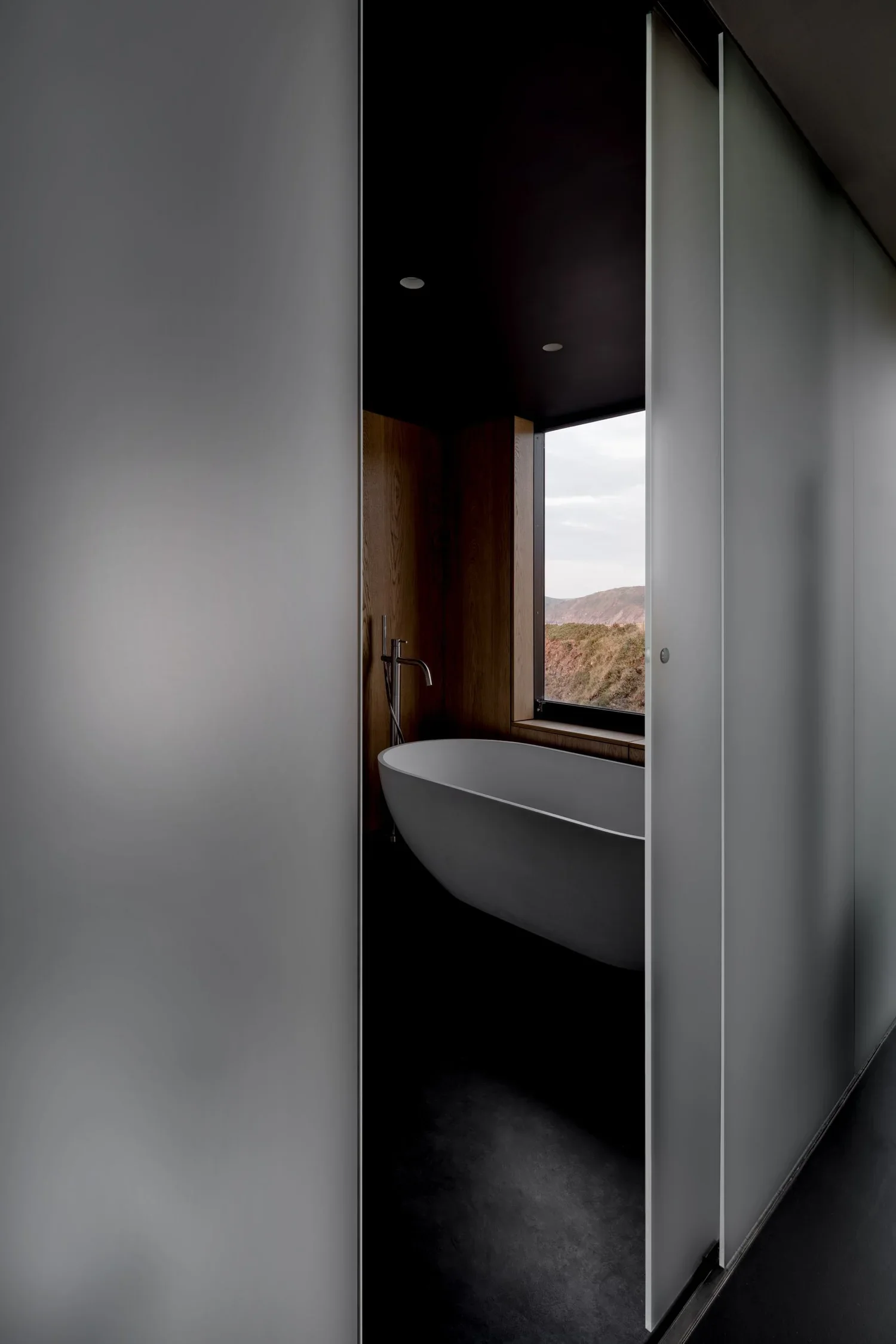
Upstairs, the living spaces contain little boxes within the larger volume. A snug looks down toward the beach of sandcastles and childhood time. A bath window is positioned so that our client can bathe while looking toward the waterfall, as if in a cyclical conversation with water. We could go on, but that is our obsession and Jane’s indulgence, and I guess it does not all belong on the page.
Windows of the Soul
Structure matters too because what we build things from has an incredible impact on how we feel, and what we feel in our core, when we are inside a building.
The ground floor rooms are embedded in concrete. Those walls continue the conversation of the foundations that anchor the home to this edge. The mass cancels the noise of storms and gives the spaces a presence that has to be experienced, not explained. You do not just see these rooms. You feel them, you really do.
The rotated ground floor bedrooms look out to the sheer cliff face opposite. The view is close. It creates a tension with topography, almost confrontational, and it roots you in the land.
Then the first floor releases it. Timber structure and a new lightness takes over, and something almost nautical embeds itself in your soul. Here you are free to soar across the views and the ocean. The lightness of the space is physical. The horizon arrives in full, therefore the house shifts from tension to expanse in a single move.
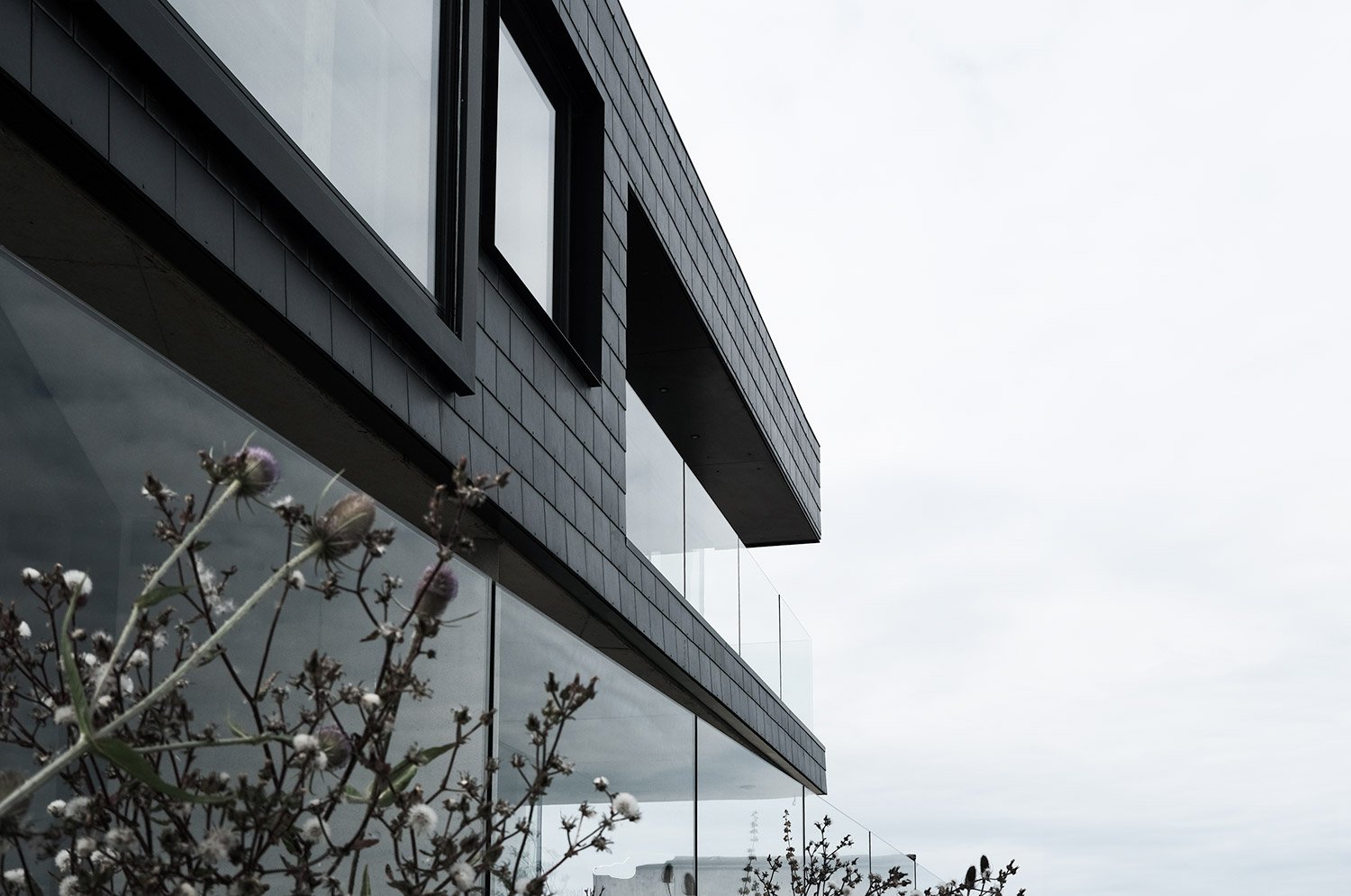
Even the arrival celebrates this idea. The entrance door and stair are cantilevered, just like the first floor, and the result is a beautiful tension with the ground. It is as if the building is already leaning toward what comes next, hinting that it is destined for a loftier encounter with the world, fed by the pull of the cliff edge.
And of course, how could we not mention the black walls. This was one of the most shocking moves in the house, and it came from part gut feeling, part risk, and part strategy. We wanted to mute the interiors so the ocean could flood in.
We took reference from Tanizaki’s In Praise of Shadows, and from the power of darkness in eastern architecture to create atmosphere and intention. At the same time, it also pulls from one of my favourite artists, Caravaggio, because there is a particular emotional power in what is withheld, and in what light is allowed to touch.
Weather as a Design Partner
The coastline itself does not permit sentimentality. The sea gives, but as we know it also takes. Salt, wind driven rain, and the abrasion of weather expose weak decisions quickly. We treated the coastline as an adversary first, and a view second. We studied prevailing winds, solar gain, and the way weather moves across the land, because this is where comfort begins. Only then did we begin to shape openings, shelter, and sequence.
There is a particular kind of restlessness that coastal houses can create when they chase openness without restraint. Glass can become a kind of noise. I think we were cautious here. We wanted the long horizon, but we also wanted refuge. Some rooms lean toward the sea, and other moments tighten and thicken, so the house can offer calm, warmth, and privacy when the weather turns dark.
The ground demanded its own honesty. Coastal edges change, and it is irresponsible to pretend otherwise. We developed a cantilever foundation approach to respond to erosion risk and shifting conditions. This was not a formal flourish, it’s unseen. It was a practical decision made in the long view, and it brought a concrete material discipline into the rest of the building.
What We Chose to Build With
Material choice followed the same logic. At the sea, aesthetics and maintenance cannot be separated. A house that weathers badly becomes a burden. We chose robust, low maintenance finishes suited to salt air and driving rain. For the first floor cladding, we specified fibre cement because it is durable, non toxic, recyclable, and well suited to a coastal setting.
We also avoided adding systems that would complicate life without genuine return. We did not pursue roof mounted solar on this project, and we did not include rainwater harvesting or a green roof. Those decisions were not made for effect. They came from a judgement about reliability, maintainability, exposure, and proportion on this particular site. Instead, the heating strategy centres on an air source heat pump, supported by an abundance of insulation, airtightness, and careful control of openings.
Surface water is directed appropriately back toward the sea, with care taken not to overload local systems. Light and wind were treated as design materials in their own right. Coastal light can be luminous, but it can also be harsh. Openings were calibrated to frame the horizon and draw in shifting light, while overhangs and shading help temper glare and seasonal gain. Wind is similar. If you treat it as something you only watch through glass, you end up with noisy interiors and external spaces that are rarely used. Orientation, controlled exposure, and moments of shelter do more than any statement ever could. The northern breakfast balcony is a perfect example of this, hidden away from the wind, this silent location allows the amplification of the crashing waves in the cove below to feel amplified.
When a Private Home Becomes a Host
I was moved to learn that Jane is now opening Edge House to the public, so that other people can experience life at the edge. The intimate ritual of waking to waves below the cliff, then stepping onto the small breakfast balcony as the sea changes hour by hour, can now be shared. On some mornings, dolphins cut across the surface, and the ordinary act of breakfast becomes a form of attention.
This change tests the architecture, and it passes. A good house can evolve as life evolves. It can change its role without losing its integrity. I now see Edge House as a custodian of more than one story. It holds Jane’s memories of childhood in this seaside town, and it now hosts the beginnings of other people’s.
What Remains
What remains is a house that now holds a dual obligation. It protects an origin story, and it opens itself to new stories. It invites people to experience a personal lens on space making, one that takes seriously the inner life, and the quiet ways a building can disclose deep meaning. It does not promise transformation. It makes room for it.
If anything, I hope new visitors experience the power of architecture to offer a platform, or a certain way of seeing the world, raw and real as it should be. I hope it brings a confrontation, not only with nature, but with ourselves as well.
—